Last updated: June 2026 — prices verified June 2026.
Oman is not a budget destination, and the guides that say otherwise are averaging costs in ways that obscure the real numbers. The fundamental problem: there are almost no hostels, accommodation starts at 15–20 OMR/night for something you’d actually want to sleep in, and you need a car to get anywhere worth going. Budget correctly and you can do it for 35–50 OMR/day (~£72–103). Budget naively and you’ll spend considerably more.
I’ve lived in Muscat for three years. I know what accommodation actually costs in Nizwa versus what the booking sites suggest, and I know that the Wadi Shab boat crossing is 1 OMR each way (not the $5 some guides quote). Here’s the honest breakdown.
The Quick Numbers
Before the detail: the three realistic budget tiers.
Cheapest guesthouses (15–20 OMR), Omani food only, shared car hire where possible, minimal paid activities. Achievable but requires planning. Most natural attractions in Oman are free — the wadis, the desert, the coast — which is what makes budget travel viable at all.
Decent hotels or guesthouses (25–45 OMR), a hired car, a mix of local and tourist restaurants, guided tours for specific activities (Wahiba Sands, Wadi Shab). This is what most independent travellers actually spend.
Good hotels, private driver for some days, nicer restaurants, guided diving or desert experiences. Very comfortable at this level — Oman is significantly cheaper than the UAE at equivalent quality.
•Daniel’s Honest Take
The “budget Oman” figures in most guides range from 25 to 54 OMR/day. The lower figure assumes you’re camping most nights and cooking your own food. The upper is closer to reality for careful independent travel without camping. Real multi-day road trip data from 2024 travellers puts the actual spend at 55–70 OMR/day per person once car rental is included. Plan for that rather than the optimistic figures.
Accommodation Costs
This is where Oman differs most sharply from Southeast Asia or the Balkans.
Hostels: essentially non-existent outside Muscat. There are a handful of backpacker options in Muscat (15–20 OMR/dorm), but the rest of Oman — Nizwa, Wahiba Sands, Sur, Salalah — has no hostel infrastructure worth speaking of.
Guesthouses and budget hotels: 15–25 OMR/night (~£31–51) for a basic clean room. The cheapest decent options in Nizwa are around 18–22 OMR. In smaller towns, local Omani guesthouses sometimes go lower if you ask directly rather than booking online.
Mid-range hotels: 35–60 OMR/night (~£72–123). This gets you a proper hotel with air conditioning (essential in summer) and breakfast included. The quality jump between 20 OMR and 40 OMR is significant in Oman.
Desert camps (Wahiba Sands): the commercial camps run 40–80 OMR/person including dinner and breakfast. A cheaper alternative: camp independently in the dunes (completely legal, no fee) with equipment rented in Muscat. I’ve done this — it’s the best night in Oman and costs nothing beyond the camp kit.
Jebel Akhdar and Jebel Shams: mountain accommodation runs 30–60 OMR. The cliff-edge rooms at Anantara are aspirational; the guesthouses in the villages are 25–35 OMR.
Car Rental — The Big Unavoidable Cost
Public transport in Oman is minimal. Microbuses between major cities exist but run infrequently. Taxis are expensive over distance. For anything beyond Muscat, you need a hired car.
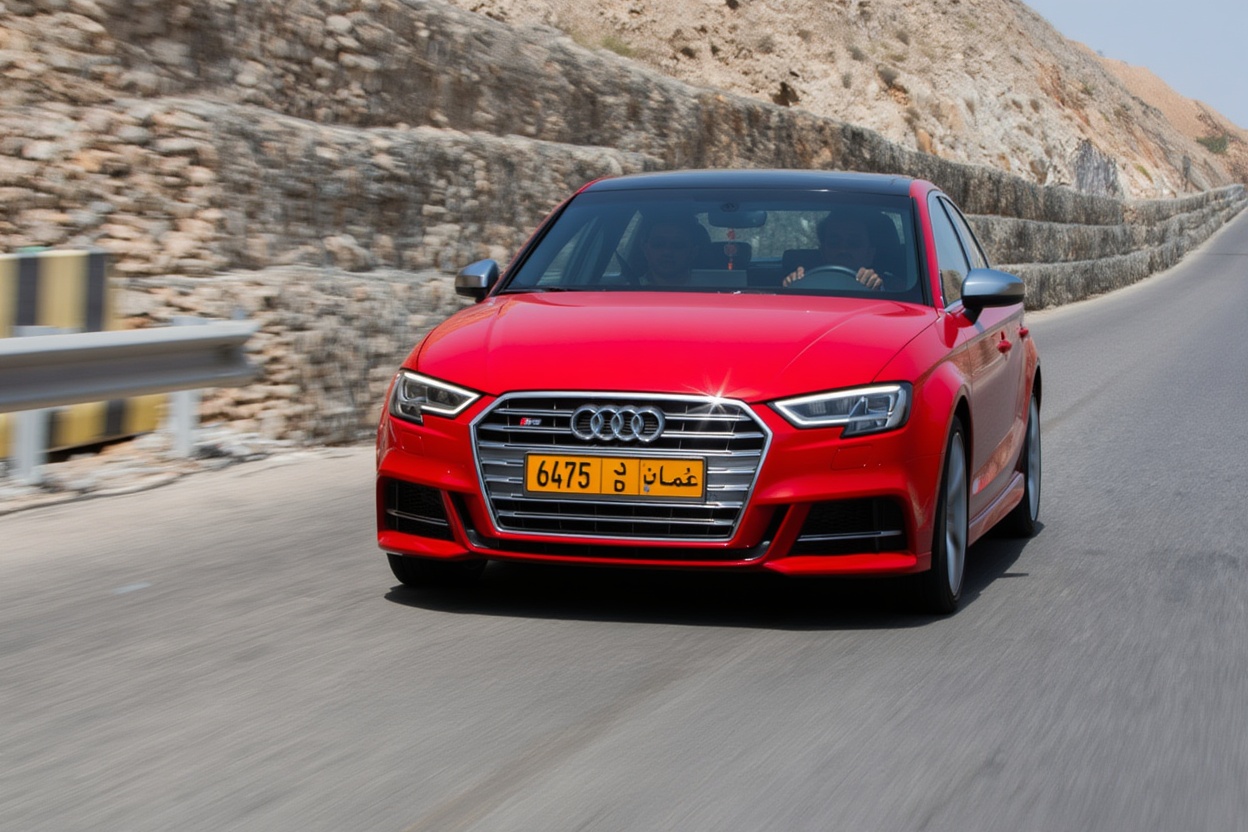
Rental rates:
– Compact saloon: 12–18 OMR/day (~£25–37). Fine for Muscat, the coast road, and Nizwa.
– SUV (non-4WD): 18–25 OMR/day (~£37–51). Better for mountain roads.
– 4WD (essential for Wahiba Sands off-road, Wadi Shab approach track): 25–40 OMR/day (~£51–82).
Petrol: Oman has some of the cheapest fuel in the world — 0.170 OMR/litre (~34p). For a 2,000km road trip, fuel costs roughly 50–60 OMR total. The car itself costs far more than the petrol.
Splitting the car: a hire car shared between two people halves the daily car cost immediately. Two people splitting a 20 OMR/day SUV pay 10 OMR each. Solo travel in Oman is significantly more expensive per-person than paired travel for this reason.
Worth knowing: some Muscat rental companies quote prices without the mandatory Oman third-party liability insurance. Check whether insurance is included before signing. Add 3–5 OMR/day if not.
Food Costs
This is where Oman is genuinely affordable, and it’s a real saving grace for the budget.
Omani restaurants (the right ones): 1.5–3.5 OMR for a full plate. Rice with fish or chicken (machboos), shuwa, harees, fresh bread — all in this range at the local Omani restaurants that are not aimed at tourists. The quality is good. In Nizwa’s old city, the lunch spots near the souq serve excellent food at these prices.
Mutrah Souq food stalls: 1–2 OMR for a snack or light meal. The halwa (Omani sweet made with rose water and saffron) from the souq shops is worth trying at 1–2 OMR for a small portion.
Tourist-facing restaurants in Muscat (Al Mouj, Shatti Al Qurum): 6–15 OMR for a main. International cuisine at roughly half the price of equivalent quality in Dubai.
Supermarkets: Lulu Hypermarket and Carrefour in Muscat have well-stocked food sections. Self-catering for a day of hiking or camping is easy — fresh fruit, bread, and hummus come to 3–4 OMR.
Coffee: Omani qahwa (spiced coffee served with dates) is sometimes offered free at guesthouses, souqs, and tourist sites. At a café, 0.5–1 OMR. Specialty coffee in Muscat: 1.5–2.5 OMR.
•DANIEL’S PICK
For the best value food in Muscat: the Omani restaurant cluster on the inland side of Muttrah Souq, not the tourist-facing places on the Corniche. The fish is landed fresh at the market 200 metres away. A full plate of grilled hammour with rice and salad: 2.5 OMR (~£5.10).
Paid Attractions and Activities
Most of what makes Oman worth visiting costs nothing. The wadis, the desert, the coastline, the mountain drives — all free. The paid attractions are the museums and forts, and they’re modestly priced.
Forts and museums:
– Nizwa Fort: 5 OMR (~£10.25)
– Jabrin Castle: 2 OMR (~£4.10)
– Bahla Fort (UNESCO): 3 OMR (~£6.15)
– Bait Al Zubair Museum (Muscat): 2 OMR (~£4.10)
– Royal Opera House tour: 3 OMR (~£6.15)
Wadi Shab: the boat crossing costs 1 OMR each way (not $5 as some older guides say). The gorge walk and cave swim are free. Hire a guide if you want — 10–15 OMR — but the route is followable without one.
Wahiba Sands camel trekking or dune driving: organised from the commercial camps, 15–25 OMR for 1–2 hours. Or hire a local guide from Al Mintirib (the village at the desert edge) for less.
Daymaniyat Islands diving/snorkelling: 25–35 OMR/person for a day trip from Muscat including gear. Worth it — the coral is exceptional.
Ras Al Jinz Turtle Reserve: 7 OMR (~£14.35) for a guided night walk. Booking required in advance (the website is functional). The green turtle nesting is genuinely extraordinary — this is worth the price.
Dolphin watching from Muscat: 17 OMR (~£35) for a 2-hour boat trip. The Muscat bay has resident spinner dolphin pods. Not guaranteed, but the hit rate is high.
Transport Between Cities
Muscat to Nizwa: 160km, 1.5 hours by car on a good dual carriageway. Microbus from Al Wahaj bus station: 2.5 OMR, but infrequent. In practice, car rental makes more sense for this route.
Muscat to Sur: 320km, 3 hours. The coastal road via Bimmah Sinkhole and Wadi Shab is the route — scenic and worth doing in a full day rather than rushing.
Muscat to Salalah: 1,050km, 10–11 hours by car. Or fly — Oman Air operates daily flights for 25–45 OMR one-way depending on timing. If you’re going to Salalah (especially for the khareef season), fly rather than drive.
Muscat airport to city: taxi 8–12 OMR. Bolt or local app 6–9 OMR. No Uber in Oman.
Sample Daily Budgets — Real Numbers
Guesthouse split 10 OMR · Breakfast (local) 1 OMR · Lunch (Omani restaurant) 2 OMR · Dinner (local) 2.5 OMR · Car hire split (20 OMR/day) 10 OMR · Petrol split 2 OMR · Entry fees averaged 2 OMR · Miscellaneous 3.5 OMR
Hotel (solo) 28 OMR · Food (mix) 8 OMR · Car hire (solo) 18 OMR · Petrol 3 OMR · Activities 5 OMR
12-day road trip actual spend (2024 data, two people): €1,727/person = ~144 EUR/day = ~66 OMR/day. This aligns with the mid-range solo estimate when car costs are split.
Money Practicalities
Currency: Omani rial (OMR). 1 OMR ≈ £2.05 / $2.60. The rial is one of the world’s strongest currencies — prices feel reasonable until you convert.
ATMs: widely available in Muscat, Nizwa, Sur, and Salalah. Less common in smaller towns — withdraw cash before heading to remote areas. ATM fees: 1–2 OMR per transaction from foreign cards.
Cards: accepted at hotels, restaurants in tourist areas, and Muscat shopping. Not accepted at souqs, local restaurants, wadi guides, or most petrol stations in rural areas. Carry cash.
Bargaining: not standard in Oman for most goods. Souq prices are sometimes negotiable on larger purchases (silver, rugs) but don’t expect the Southeast Asia bargaining culture.
Best Value Experiences in Oman
Oman isn’t cheap, but some things offer remarkable value for the money. Here’s where the budget goes furthest.
Wadi Shab gorge walk and cave swim (2 OMR total). The boat crossing at the trailhead costs 1 OMR each way — that’s the entirety of what you pay to access one of the most spectacular half-day walks in the Gulf region. The gorge narrows progressively, the water turns turquoise, and the final section requires swimming through an underwater passage into a hidden cave with a waterfall inside. The path is followable without a guide. Bring food and plenty of water — there’s nothing for sale on the trail and it’s exposed in the middle of the day. Early morning start is essential from April through October.
Camping independently in Wahiba Sands (cost of fuel + camp kit). The commercial desert camps at Wahiba Sands charge 40–80 OMR/person for a night with dinner and breakfast. You can camp independently in the dunes for nothing — it’s legal, practical with the right equipment, and the experience is better. Rent camping gear in Muscat (sleeping bag, tent, cooking stove): 15–20 OMR/day. Drive to the dunes at Al Mintirib. The dune ridge at sunset with nobody else visible for ten kilometres in any direction is worth more than the commercial camp price. I’ve done both. The independent camp wins.
Jabrin Castle (2 OMR). Jabrin is frequently overlooked in favour of Nizwa Fort, which is more famous and three times the price. Jabrin is, architecturally, the more interesting building: a 17th-century palace-fort with painted ceilings, ornate wooden doors, and virtually no crowds. In an hour here you’ll have it largely to yourself. Bahla Fort (a UNESCO site, 3 OMR) and Jabrin are 20 minutes apart — do both in a morning for 5 OMR total.
The Muscat fish market at Muttrah (free). The fish market at Muttrah Corniche opens in the early morning and is one of the most visually striking markets I’ve encountered in the Gulf. Hammour, kingfish, tuna, and shark are brought in from boats and sold wholesale and retail on the same floor. Watch the auctions. Buy nothing if you don’t have kitchen access. Spend zero. Understanding where the fish comes from makes the Omani restaurant meals later in the trip mean more.
Ras Al Jinz turtle reserve night walk (7 OMR). This is not expensive for what it is. Green sea turtles nesting on a moonlit beach in the Indian Ocean, guided by a ranger who knows exactly where the active nests are that night. Book online in advance — spots are limited and the reserve is managed to minimise disturbance to the turtles. The 7 OMR (~£14.35) is among the best-value wildlife experiences in the region. The road to Ras Al Jinz from Sur is worth taking during the day for the coastal scenery.
What Catches Tourists Out
Oman’s costs are not deceptive — they’re simply higher than most first-time visitors expect. But there are specific patterns where people overspend unnecessarily.
Not splitting the car. This is the single biggest avoidable cost difference in Oman. A 20 OMR/day SUV hire shared between two people costs 10 OMR/person. Solo, it’s 20 OMR. Over a 10-day road trip, the difference is 100 OMR per person — enough to significantly change your accommodation budget. If you’re travelling alone and flexible on dates, co-ordinating your Oman trip with one other solo traveller and splitting a hire car is the most impactful budget move available. Even splitting for three or four days of the trip, for the Wadi Shab and Nizwa sections, saves materially.
Booking desert camps before checking independent camping options. The commercial Wahiba Sands camps are well-run and the experience is comfortable. They’re also 40–80 OMR/person for one night. Independent camping in the same dunes costs the price of renting kit and filling the fuel tank. The dunes are public land. You need a 4WD to reach the proper interior dunes; you don’t need one to park at the edge and walk in. Many travellers book the commercial camp out of habit without checking whether they could camp independently — check first.
Muscat airport transfers at rack rate. The taxi rank outside Muscat’s Muscat International Airport charges 10–15 OMR to central Muscat. Bolt and the local equivalent give you the same journey for 6–9 OMR. Download Bolt before your flight. There’s no Uber in Oman. The saving is modest but habitual: the same principle applies to taxis throughout Muscat — app-based rides run 30–40% cheaper than street hails or hotel-called taxis.
Booking car hire from international chains at the airport desk. Hertz, Avis, and Budget at Muscat airport charge a significant premium over local operators. The price difference for the same vehicle category can be 8–12 OMR/day — which over a week-long hire is 56–84 OMR. Local operators (Mark Auto, National, Al Qurum) in Muscat’s central area rent comparable vehicles for 12–18 OMR/day for a saloon, 18–25 for an SUV. The catch: local operator cars are older and customer service is less polished. Trade-off is worth making.
Paying tourist restaurant prices for food. The Muscat tourist restaurant scene on the Shatti Al Qurum strip charges Gulf-resort prices: 8–15 OMR for a main. The Omani restaurants that residents use — the cluster near Muttrah Souq, the lunch spots on the Nizwa souq road — charge 1.5–3.5 OMR for food that is, frankly, more interesting. You don’t need to eat at tourist restaurants in Oman. The local food is the better option on every metric.
Budget by Trip Length — Worked Examples
Here’s what Oman road trips actually cost when planned at different budget levels, based on real trip data.
7 days: Muscat + Nizwa + Wadi Shab (two sharing, budget-focused)
Car hire SUV 7 days split 70 OMR per person · Petrol split 12 OMR · Guesthouse 6 nights split 66 OMR · Food 7 days local restaurants 35 OMR · Wadi Shab boat 2 OMR · Nizwa Fort 5 OMR · Jabrin Castle 2 OMR · Misc 33 OMR. Total per person: ~225 OMR (~£461).
Car hire + petrol split 90 OMR · Hotel 6 nights split 180 OMR · Food (mix local/tourist) 70 OMR · Activities including Ras Al Jinz + Daymaniyat dive 50 OMR · Misc 45 OMR. Total per person: ~385 OMR (~£790).
10 days: Muscat + Nizwa + Wahiba Sands + Sur + Wadi Shab (two sharing)
4WD car hire 10 days split 150 OMR · Petrol (2,000km circuit) split 30 OMR · Accommodation (mix guesthouse + 1 independent camp) 9 nights split 110 OMR · Food 10 days @4 OMR/day 40 OMR · Activities 25 OMR · Misc 45 OMR. Total per person: ~400 OMR (~£820). This aligns with real 2024 trip-report data.
Same itinerary but car costs not shared. The per-person cost rises significantly without a travel partner — 4WD hire alone is 30–40 OMR/day. Consider joining a group tour for the desert and wadi sections, or posting in Oman expat groups to find a co-traveller.
12 days including Jebel Akhdar and Jebel Shams: Add 2–3 nights of mountain accommodation (25–40 OMR/person/night in village guesthouses) and the canyon viewpoint drive (free, but requires an SUV on the Jebel Shams road). Total trip cost increases by 100–150 OMR per person, bringing a 12-day mid-range trip to approximately 600–700 OMR/person (~£1,230–1,435) for two sharing.
Digital Nomad Budget — One Month in Muscat
Oman is not a traditional digital nomad destination — the visa situation is less flexible than Southeast Asia or Eastern Europe, and the cost base is higher. But for those who want Gulf access with a fraction of Dubai’s prices, Muscat is worth considering.
Visa: Tourist visas are 30 days on arrival (free for many nationalities). The 10-year multiple-entry tourist visa costs 5 OMR and gives 1-month stays. There is no formal digital nomad visa yet, though Oman is reportedly planning one. Long-term stays typically require sponsorship or working through a free zone.
Accommodation: A furnished one-bedroom apartment in Al Khuwair or Bawshar (central, residential neighbourhoods — not the tourist-facing Shatti Al Qurum) rents for 200–350 OMR/month (~£410–718). Serviced apartments with pools in Muscat: 300–500 OMR/month. These are significantly cheaper than Dubai equivalents (Dubai equivalent: £1,200–2,000/month) and Muscat is a noticeably quieter city to live in.
Food: Cooking from Lulu Hypermarket: 150–200 OMR/month for a good diet. Eating at local Omani restaurants 4–5 times a week: add 80–120 OMR. The combination of good self-catering and local restaurants gives a monthly food budget of 250–320 OMR (~£513–656).
Coworking: Muscat’s coworking scene is modest but functional: The Hive and Beehive Muscat both operate, at 50–80 OMR/month for a hot desk. Most nomads work from home or café terraces. The Oman Tech Hub and similar spaces occasionally offer day passes (5–8 OMR) without monthly commitments.
Apartment 270 OMR · Food (mix local/cooking) 280 OMR · Coworking or café 60 OMR · Car hire (monthly rate from local operator) 200 OMR · Petrol 20 OMR · SIM/data 10 OMR · Sundry 60 OMR. More expensive than Southeast Asia or the Balkans, but substantially cheaper than Dubai or Abu Dhabi for equivalent comfort. The safety record, lack of tourist crowds, and access to extraordinary driving roads make Oman worth the premium over cheaper alternatives.
- How much does Oman cost per day in 2026?
- For careful independent travel, budget 35–50 OMR/day (~£72–103) per person when sharing a car and accommodation with a travel partner. Solo travel costs more — typically 55–70 OMR/day — because accommodation and car hire can’t be split. The main cost drivers are accommodation (no hostels, cheapest decent guesthouse is 15–20 OMR) and car hire (essential, 15–25 OMR/day). Food is cheap — 1.5–3.5 OMR for a full Omani meal.
- Is Oman expensive for tourists?
- Relative to Southeast Asia or Eastern Europe, yes. Relative to the UAE or Qatar, no — Oman is noticeably cheaper. The expensive elements are accommodation (limited budget options, no hostels) and car hire (unavoidable for most of the country). The cheap elements are food (Omani restaurants cost 1.5–3.5 OMR for a full plate), petrol (0.170 OMR/litre), and most natural attractions (wadis, desert, coastline are free).
- Do I need to rent a car in Oman?
- Yes, for almost anywhere beyond Muscat. Public transport is minimal — microbuses run between some cities but infrequently and slowly. Taxis are expensive over distance. A hire car from 12–18 OMR/day (saloon) is necessary for Nizwa, Wadi Shab, Wahiba Sands, Jebel Akhdar, and the south coast. The cost is manageable when split between two people. A 4WD (25–40 OMR/day) is only required for actual off-road driving in Wahiba Sands or rough wadi tracks.
- How much is a meal in Oman?
- At an Omani local restaurant: 1.5–3.5 OMR (~£3–7) for a full plate of machboos, grilled fish, or lamb with rice and bread. At tourist-facing restaurants in Muscat: 6–15 OMR per main. Street food and souq stalls: 0.5–2 OMR. The food budget is manageable — 6–8 OMR/day eating primarily at local restaurants is realistic and the food is genuinely good.
- Is Wadi Shab free to visit?
- The gorge walk and cave swim are free. The boat crossing at the start costs 1 OMR each way (some older guides say $5 — ignore those). Hiring a guide for the full route costs 10–15 OMR but is optional — the path is followable without one. Parking at the trailhead is free. Bring your own food and water; there’s nothing for sale on the trail.
- What is the cheapest way to travel Oman?
- Two people sharing a hire car and splitting accommodation. The per-person cost drops significantly when you split a 20 OMR/day car and a 20 OMR/night guesthouse. Camping independently in the wadis and Wahiba Sands eliminates accommodation cost entirely (legal and practical with the right kit). Eating at Omani local restaurants rather than tourist spots saves 4–10 OMR/day. The natural attractions — the wadis, the desert, the coast — are free.
Seasonal Budget Differences: When to Go for Best Value
Oman’s costs are not constant throughout the year. The seasonal variation is real and, for a budget-conscious traveller, getting the timing right can save 20–30% across a week-long trip.
Peak season (December–February): Hotel prices in Muscat run 20–30% higher than the rest of the year. Wahiba Sands camps book out weeks ahead. This is when Oman is at its most pleasant — 22–28°C, everything accessible — and when demand drives prices up accordingly. A mid-range hotel that costs 35 OMR/night in October costs 45–50 OMR in January. Still worth it if this is your only window, but price-shop across Booking.com, Agoda, and the property’s direct booking page — the variance is sometimes significant.
Shoulder months (October–November and March): The sweet spot for budget-conscious travellers who want good weather. October is particularly strong: temperatures have dropped from summer highs to a manageable 28–32°C, hotel prices are pre-peak, and the wadis are good. A Wahiba Sands camp that charges 60 OMR/person in January may be 45–50 OMR/person in October. Book the same quality accommodation for meaningfully less money.
Low season (May–September, excluding Salalah): Hotel prices drop 25–40% versus peak. A room that costs 45 OMR in January is 28–32 OMR in June. The tradeoff is the heat — 40–45°C in Muscat makes outdoor activities difficult from 9am to 5pm. If you’re focused on cultural sites (Grand Mosque, museums, souqs — all air-conditioned) rather than wadi walks and desert camping, the low-season discount is real value. The wadis remain accessible with very early starts.
Salalah in khareef (July–August): The inverse of the above. Salalah accommodation prices rise in peak khareef — July and August — because Omani domestic tourism fills it. Budget options from 12–20 OMR/night. Mid-range hotels like the Hilton Salalah jump from their off-peak 40 OMR to 60–80 OMR. If you’re going to Salalah during the monsoon season, book accommodation 6–8 weeks ahead and expect to pay near-peak rates.
Visa Costs — What You’ll Pay Before You Arrive
Most nationalities can enter Oman on an e-visa or visa on arrival. The costs are modest but worth factoring into a budget calculation:
Single-entry visa: 20 OMR (~£41 / $52) for a 10-day stay. Not particularly useful for most Oman trips — the standard tourist activities require at least 7–10 days and don’t leave much buffer.
10-year multiple-entry tourist visa: 5 OMR (~£10.25 / $13). This grants stays of up to 1 month at a time. It’s by far the better option — the 5 OMR for a 10-year visa, versus 20 OMR for a single entry, makes the maths straightforward. Widely available online through the Royal Oman Police e-visa portal before travel.
Visa on arrival: many nationalities (including UK, EU, US, Australian) can obtain a tourist visa on arrival at Muscat International Airport. Cost varies by nationality — check the Oman eVisa portal for your specific passport. Typically 20 OMR for a standard single entry or 50 OMR for a multiple-entry stamp at the airport. The online 5 OMR multiple-entry visa is cheaper than the airport equivalent for most nationalities — process it online before your trip.
GCC residents: free entry with a valid GCC residence permit. If you’re already living in Dubai, Abu Dhabi, Bahrain, or Qatar, your GCC residency card allows entry to Oman without an additional visa. This makes Oman an extremely cheap weekend or long-weekend destination for Gulf residents.
Communications and SIM Cards
Oman has two main mobile operators — Omantel and Ooredoo — and tourist SIM cards are available at Muscat airport and from any operator branch in the city. Connectivity is good in Muscat, along main highways, and in major towns; patchy to non-existent in remote wadis and the interior of Wahiba Sands.
Tourist SIM card: 5–10 OMR (~£10–21) for a SIM with 5–15GB of data and a local number. Useful for navigation, offline maps, and calling ahead to check opening times. Buy at the airport on arrival rather than roaming on your home SIM — the roaming rates from most European providers make even an afternoon of navigation expensive.
Offline maps: Download Google Maps offline areas for the regions you’re visiting before you leave Muscat. Mobile signal in Wadi Shab, Wahiba Sands, and Jebel Akhdar is unreliable. The Maps.me app with Oman loaded offline is the backup navigation system that has saved multiple road trips.
eSIMs: Airalo, Holafly, and similar services offer Oman eSIMs at competitive rates for travellers who prefer not to manage a physical SIM. Typically 8–12 OMR equivalent for 10–15GB. Convenient; slightly more expensive than buying locally.
Health and Travel Insurance Budget
Worth knowing: Oman’s public hospitals are excellent by regional standards, and Muscat has private hospitals (e.g., Muscat Private Hospital, Royal Hospital) that provide high-quality care at costs well below equivalent private care in the UK. That said, travel insurance covering medical evacuation and hospital treatment is advisable for any Oman trip, particularly for wadi hiking and desert activities.
Travel insurance: a standard single-trip policy covering Oman costs approximately £25–55 ($32–72) from UK/European providers for a 10–14 day trip. Policies with adventure activity cover (for wadi hiking, canyon activities, off-road driving) cost more — typically £40–80. Budget this into your pre-trip spend.
Health: no vaccinations are required for Oman. Recommended (depending on your doctor’s advice): hepatitis A, typhoid, and tetanus boosters as general travel precautions. Prescription medication is available at Muscat pharmacies, which are well-stocked. Sunscreen is sold in every pharmacy and Lulu Hypermarket — the SPF50 variety is worth buying there if you didn’t pack it.