Wahiba Sands Guide: Desert Camping, Dune Driving, and the Night Sky
Updated June 2026 — Daniel Marsh has been based in Muscat for three years and has driven to Wahiba Sands four times, once without booking ahead and once without a tyre pressure gauge. Neither mistake is recommended. Prices verified June 2026.
Wahiba Sands is 12,500 square kilometres of sand dunes in central Oman, two and a half hours south of Muscat, and one of the most accessible desert experiences in the Arabian Peninsula. The dunes run from knee-height rippled sand near the edges to 100-metre ridgelines deep in the interior. You need a 4WD, deflated tyres, and either a booking at a desert camp or a properly equipped vehicle for independent camping. Everything else is detail.
What Wahiba Sands Actually Is
The Wahiba Sands — formally the Sharqiyah Sands, though most people use the older name — cover the eastern interior of Oman between the Hajar Mountains and the Arabian Sea. The sand is ancient Saharan origin, blown east by prevailing winds, and the dune forms shift between the classic crescent-shaped barchan dunes on the western edge and the larger, more complex star dunes deep in the interior.
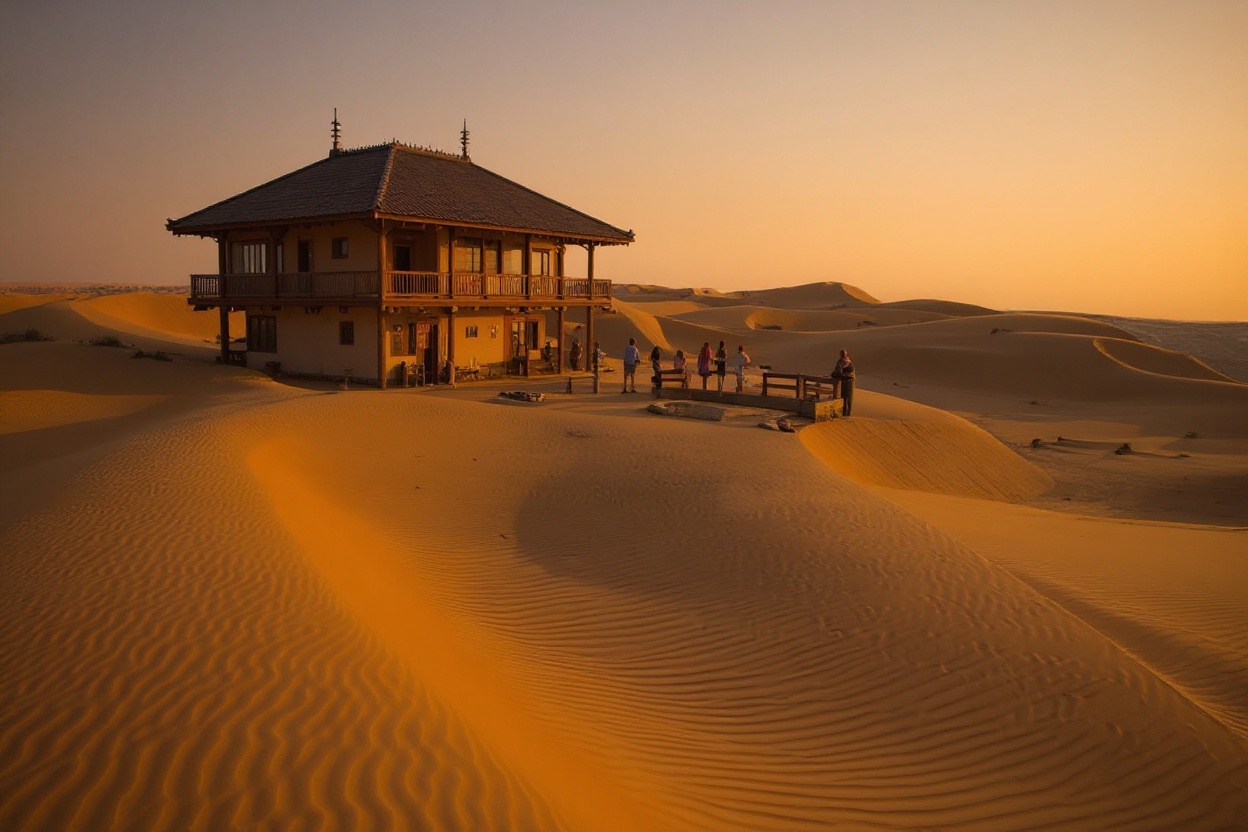
It’s not empty. Bedouin families have lived on the edges and in the interior of Wahiba for generations — the Wahiba (Al Wahibi) tribe gives the desert its common name. Some still move with camels through seasonal routes. The camel herds you’ll see near the western access roads belong to families who have been here considerably longer than the paved road in from Muscat.
The scale is the thing that surprises people. From the first dune you climb — usually within 10 minutes of leaving the tarmac — the sand extends to the horizon in every direction. The dunes catch the light differently at every hour. At 5am before sunrise, they’re grey-purple. At 6am, they turn orange-gold. By noon, they’re bleached white and unpleasant to look at directly. At sunset, they go amber-red and the shadows make every ridge look 100 metres taller than it is. Come for two of these light events minimum. One is not enough.
The Main Decision: Desert Camp vs. Independent Camping
This is the choice that defines your Wahiba experience. Right, here’s the honest version of each option.
Managed Desert Camps
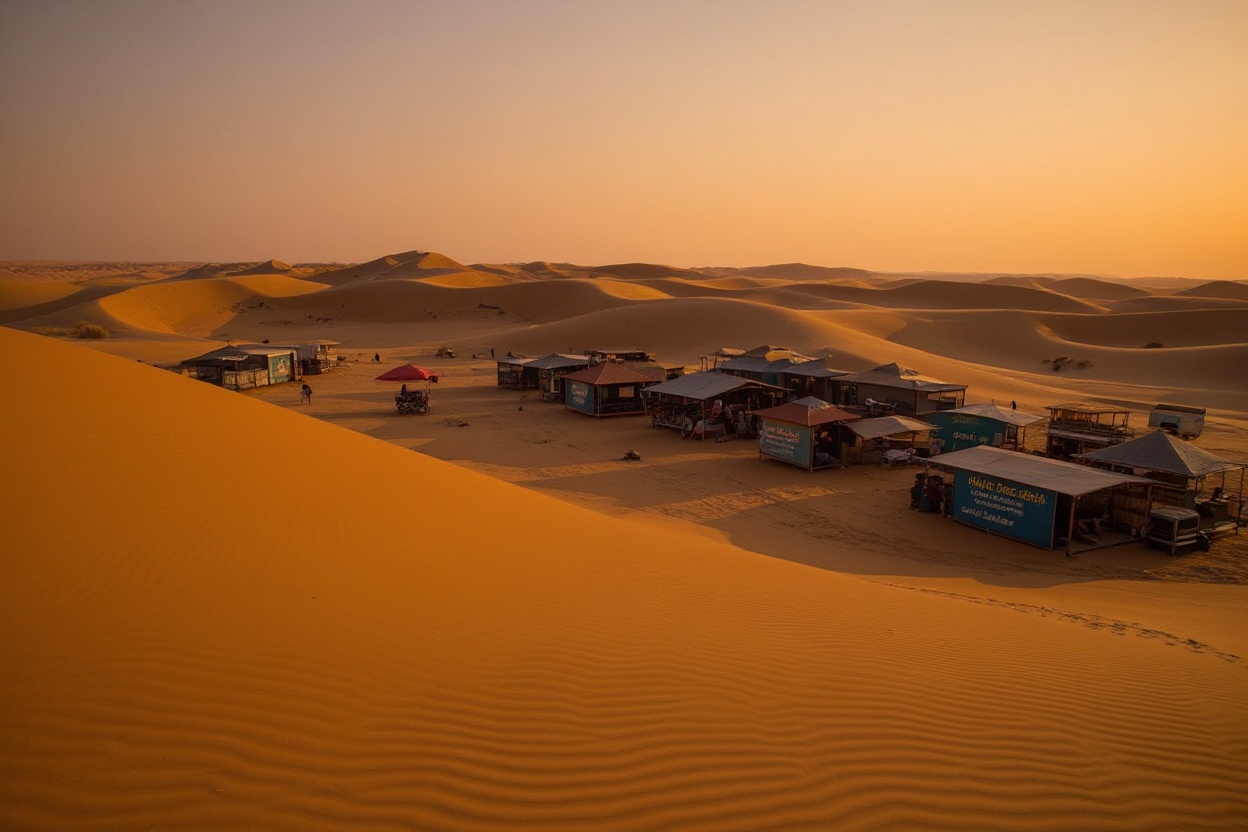
The permanent desert camps — Desert Nights Camp, 1000 Nights Camp, and several others — are pre-positioned within the dunes on 4WD-accessible tracks. They provide tent accommodation (usually en-suite, with air conditioning in the heat-season variants), dinner and breakfast, guided camel rides, and dune driving excursions with their camp staff. Some have fire pits and evening entertainment. Rates run 45–80 OMR per person per night (£93–165 / $117–208) including meals.
What you get: the Wahiba experience without having to think about water supply, vehicle recovery if you get stuck, or cooking in 30-degree heat. The sunrise excursions are organised for you — a guide drives you to a good dune ridge at 5:30am and you watch the light change with a cup of kahwa in hand. The camps are comfortable and efficiently run.
What you give up: the silence. A camp with 20 other guests is not silent. The managed itinerary means you’re on the camp’s schedule rather than your own. And the specific magic of having the dunes to yourself — which is possible at 4:30am if you’re camping independently — doesn’t happen when you’re sharing the experience with a pre-organised group.
Independent Camping
Drive your own properly equipped 4WD into the dunes, find a ridge away from the camps, pitch a tent, cook on a camp stove, wake at 4:30am and watch the stars until the sky starts changing. No other guests. No schedule. The silence of the Wahiba dunes at 5am is genuinely absolute in a way that’s hard to describe — not city-quiet-with-background-noise but the kind of quiet that makes you aware of your own breathing.
What you need: a 4WD with sand plates or a proper sand recovery kit, enough water for your full stay plus emergency reserves, food and cooking equipment, a working knowledge of dune driving (or a willingness to learn it carefully), and ideally a second vehicle if you’re going deep into the interior. The dunes are not forgiving of mechanical failures or poor judgement about soft sand. People get stuck. Most are fine. Some are not fine for several hours.
Budget: diesel costs about 3–4 OMR return from Muscat. Zero accommodation cost beyond the equipment you already own. This is the objectively better experience for people who want the desert on the desert’s terms.
DANIEL’S HONEST TAKE: The tent camps are comfortable and they work well for people who want Wahiba without the logistics overhead. I’ve stayed at Desert Nights Camp and I’d stay again for a group trip. But the independent camping version — the one where you’re the only light source visible for 10 kilometres in every direction at 2am — is a fundamentally different experience. If you have a properly equipped 4WD and know how to drive sand, go that route. If you don’t, book the camp and don’t feel like you’re missing anything essential.
Choosing a Desert Camp
Desert Nights Camp — the most established mid-range option. Permanent luxury tents, en-suite bathrooms, dinner and breakfast included, pool (small, but functional in the heat), guided activities. 50–70 OMR per person per night (£103–145 / $130–182). Book well ahead for October–March weekends and for November and February national holiday periods — it fills completely.
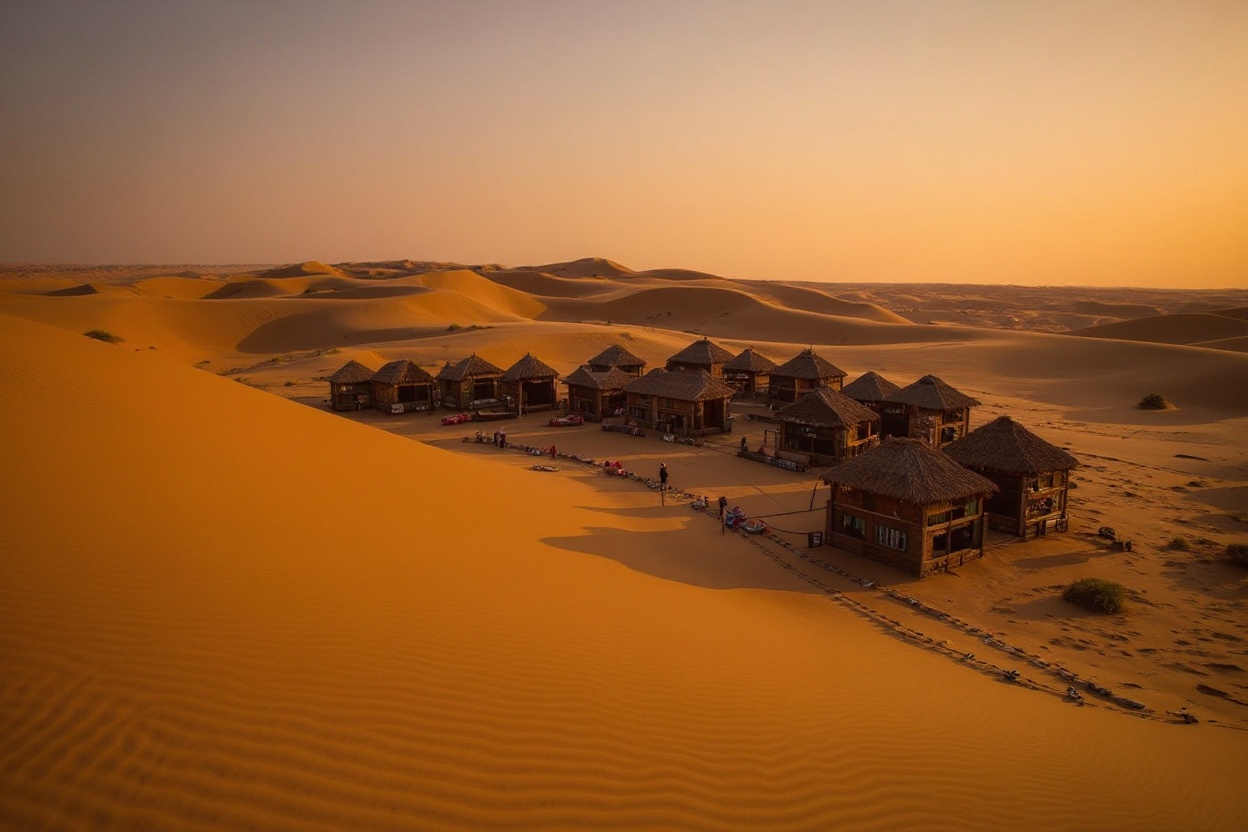
1000 Nights Camp — similar standard, slightly smaller, generally slightly cheaper at 45–65 OMR per person. Well-reviewed for the food quality and the staff knowledge of the dune terrain. The morning excursions are well-timed relative to the actual sunrise.
Budget camp options — several simpler camps on the dune edges offer basic tent accommodation for 20–35 OMR per person, sometimes without private bathrooms. Fine for a single night if you want the dune experience without the cost. Less polished but the stars are the same.
Booking note: both the main camps have online booking systems that work reliably. Book directly rather than through a tour operator where possible — you’ll pay 15–20% less and can communicate directly about excursion timing.
| Wahiba Sands at a Glance (2026) | |
|---|---|
| Distance from Muscat | ~200km — 2h30m via Route 23 to Ibra, then Al Wasil/dune access |
| 4WD required? | Yes — mandatory. Regular car will not make it past the tarmac edge. |
| Tyre pressure | Deflate to 1.0–1.5 bar for dune driving. Re-inflate before tarmac. |
| Desert camp (mid-range) | 45–70 OMR per person/night including meals |
| Budget camping | Free — bring water, food, recovery kit, second vehicle if possible |
| Best activities | Sunrise from dunes, dune driving, camel riding, stargazing |
| Best time | October–March. April starts hot. May–September: brutal. |
| Combine with | Wadi Bani Khalid (80km), Sur & turtle beach (150km east), Nizwa (130km) |
| Currency | OMR — 1 OMR ≈ £2.05 / $2.60 |
Getting There: The 4WD Logistics
From Muscat, drive south on Route 23 (Muscat-Sur highway) to Ibra — about 180km, 2 hours on good dual carriageway. At Ibra, follow signs toward Al Wasil. From Al Wasil village, the tarmac ends and the dune tracks begin. Total driving time Muscat to first dunes: 2.5–3 hours depending on traffic through Muscat.
The access tracks from Al Wasil are marked by GPS coordinates shared by the camps — get these before you leave if you’re not following camp signage. The tracks are visible but shift after windstorms. A downloaded offline map (Maps.me or OsmAnd with the Oman overlay) plus the camp’s coordinates is sufficient navigation for the main western access.
Tyre deflation is not optional advice — it’s the difference between driving on sand and getting stuck in it. Deflate from standard road pressure (32–35 psi) to approximately 15–20 psi (1.0–1.5 bar) before you leave the tarmac. This widens the tyre footprint and creates the flotation effect that allows dune driving. A tyre pressure gauge and a portable compressor for re-inflation on the return are both essential. The camps can re-inflate your tyres on departure; for independent camping, you need your own compressor.
If you’re renting a 4WD: confirm with the rental company that dune driving is permitted under the rental agreement. Most Muscat rental companies explicitly permit Wahiba Sands access in a 4WD. Some don’t cover vehicle recovery if you get stuck. Read the policy. The Muscat airport desks for Avis and Budget both have 4WD options that cover Wahiba Sands.
Dune Driving: What You Actually Need to Know
Dune driving in Wahiba Sands is not difficult if you follow the basic rules. It is genuinely dangerous if you don’t.
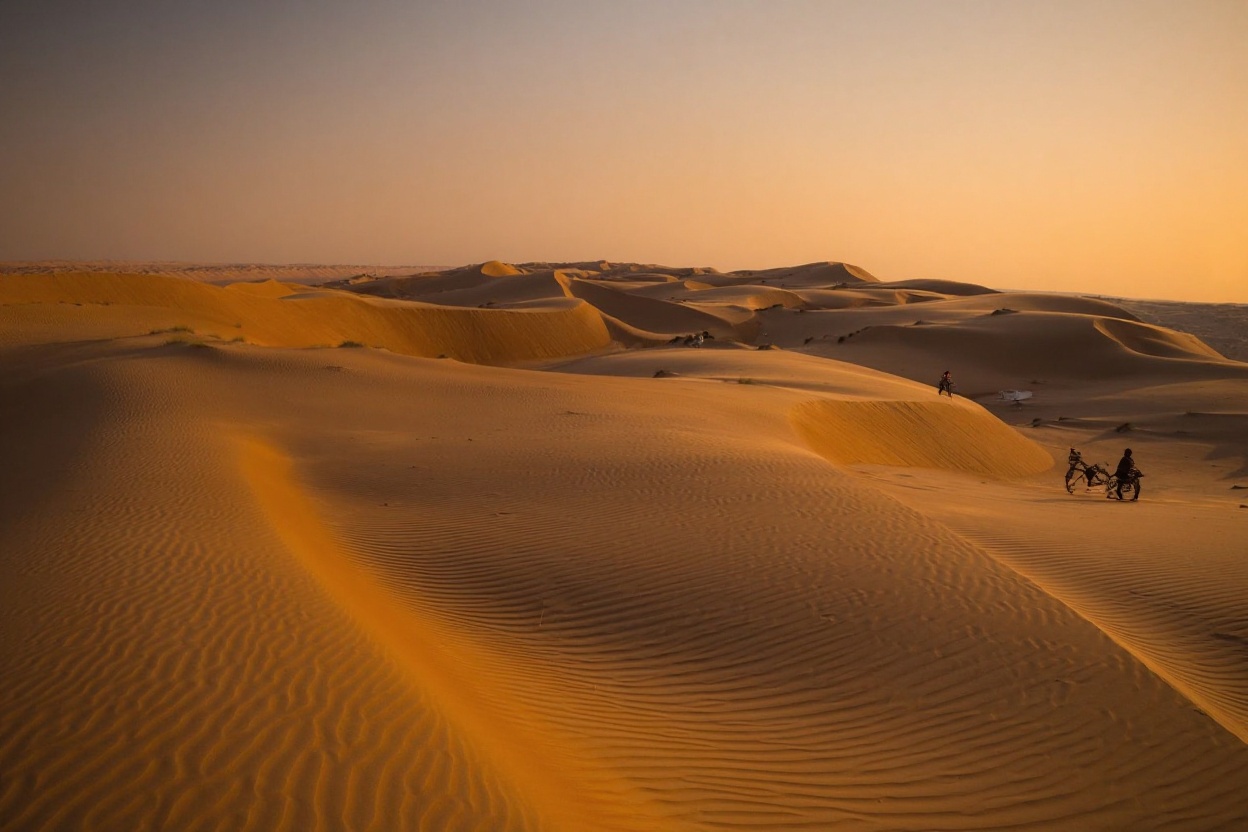
The rules: Always drive at speed over crest lines — slowing at a dune crest risks getting stuck at the top, which is the worst position for recovery. Never stop on a slope unless you absolutely must. Drive in the tyre tracks of previous vehicles where visible — they’ve already established a path through soft sand. If you start to lose momentum on an ascent, stop, reverse down the way you came, and try again with more speed. Don’t panic-brake.
If you get stuck: don’t spin the wheels. This digs you in faster. Reverse and rock gently. Use sand plates under the tyres if you have them. Deflate tyres further if you haven’t already reached minimum pressure. Call the camp if you’re near one — most will assist guests and often help independent campers too, for a small recovery fee.
The camps offer guided dune driving experiences — a staff driver takes you in their vehicle so you can experience the dune riding without managing it yourself. This is the right choice for first-time Wahiba visitors who want to understand what the terrain actually involves before attempting it independently. About 15–25 OMR per person for a 90-minute session.
What to Do in the Dunes
Sunrise (Non-Negotiable)
Set your alarm for 5:00am. Walk or drive to a dune ridge that faces east and has clear sky in that direction. Sit. The sky goes from black to dark blue to pale grey to the specific orange that precedes full sunrise, and the dunes change colour with it. The silence at 5:15am in Wahiba — before the wind picks up, before any other sounds — is the kind of thing people mention years later when explaining why they went to Oman.
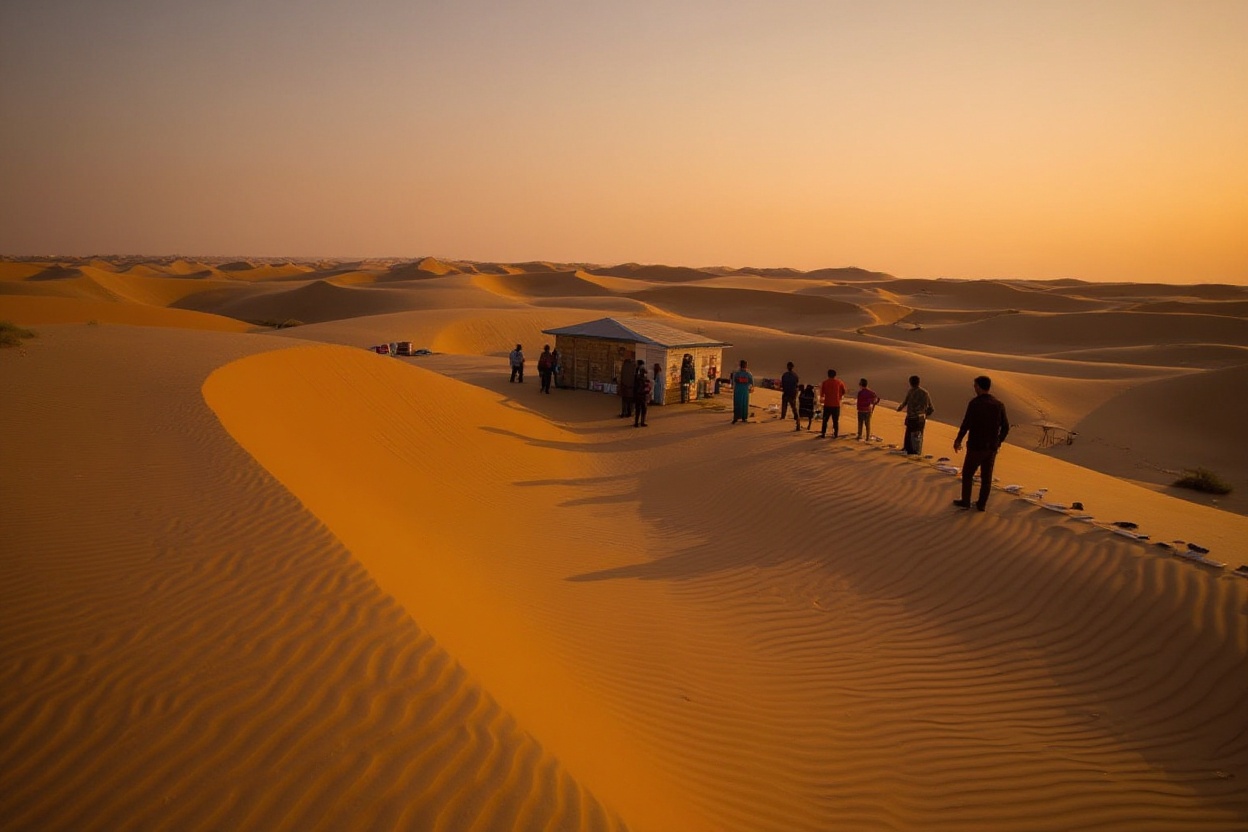
At 5:45am (approximately, depending on month — check sunrise time before you go), the sun clears the horizon and the dunes turn gold. This lasts about 20 minutes before the light normalises. Be on your ridge before 5:30am.
Sandboarding
The camps rent sandboards (essentially snowboards for sand) for 3–5 OMR per hour. Technique is closer to sitting on a board and pointing it downhill than anything athletic — but on a 30-metre dune face, the speed builds quickly and the sand landing is softer than it looks. Kids love it. Adults maintain dignity for approximately the first two runs.
Camel Riding
Arranged through the camps, typically 10–20 OMR for a 30-minute circuit of the camp perimeter. The experience is more jolt-and-sway than romantic-desert-journey, the camel has opinions about the direction of travel, and the view from camel-height is genuinely different from ground level. Worth doing once. Probably not twice.
Stargazing
Wahiba Sands has minimal light pollution — the nearest significant town is Ibra, 30km west — and on a clear moonless night the Milky Way is properly visible. The Bortle scale puts the Wahiba interior at Class 2–3 (very dark rural sky). If you have any interest in astronomy or astrophotography, bring the right equipment. If you don’t, just lie on the dune and look up. It still works.
Combining Wahiba Sands with Sur and the Coast
Wahiba Sands sits geographically between Muscat (north) and Sur (east), which makes a two-night circuit natural: drive Muscat to Wahiba Sands first night, drive Wahiba to Sur second night, return Muscat on day three via the coast road.
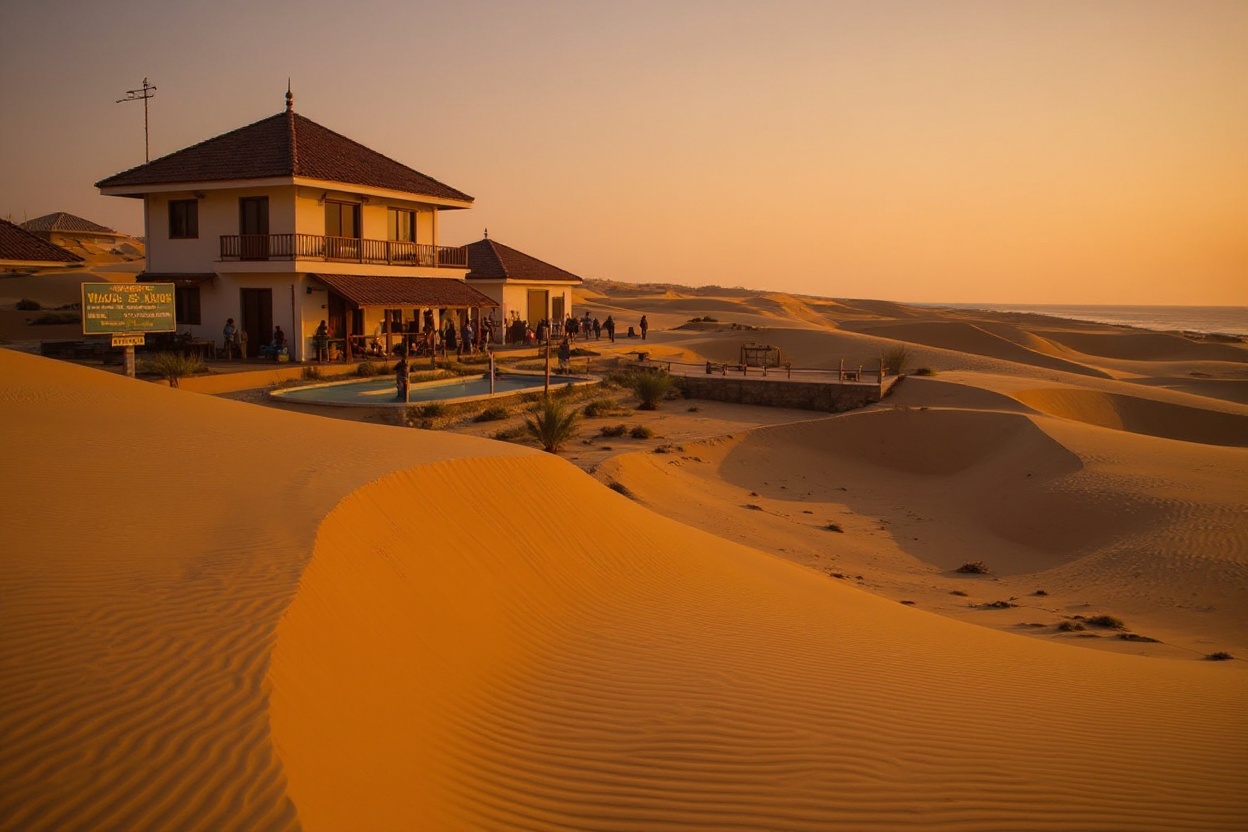
Sur (150km east of Wahiba Sands western edge) is one of Oman’s most attractive coastal towns — a traditional dhow-building centre with a working shipyard, a waterfront that isn’t overdeveloped, and proximity to Ras al Jinz turtle beach (40km south), where green turtles nest from June to August and the ranger station organises 9pm watching sessions.
Wadi Bani Khalid is 80km northwest of Wahiba Sands on the return route to Muscat — natural limestone pools, cold water, one of the most accessible wadi swimming experiences in Oman. The full guide to Wadi Bani Khalid at wadi-bani-khalid covers the logistics for that stop.
Adding Nizwa to this circuit extends it by one more day — Nizwa is 130km from the western edge of Wahiba Sands. The full Muscat → Nizwa → Wahiba Sands → Sur → Muscat circuit takes three to four nights and covers the most important interior Oman experiences in one logical loop. For the complete Muscat base logistics, the Muscat travel guide has the starting-point detail.
What to Bring
Water: bring significantly more than you expect to need. In the desert, dehydration happens faster than in urban environments and there are no shops past Al Wasil. 4 litres per person per day minimum, more if you’re camping multiple nights. The camps provide water; independent campers need to carry it.
Sun protection: SPF 50, a hat with neck coverage, long sleeves for the midday hours. The sand reflects UV upward as well as the sun delivering it from above. People who grew up in northern England (this describes Daniel) underestimate desert sun every single time.
Tyre equipment: pressure gauge, portable compressor, sand plates if you have them. Non-negotiable for independent camping; useful even for camp stays in case you drive independently around the camp area.
Torch and warm layer: desert temperatures at night in winter (December–February) drop to 8–12°C. It feels cold after a day in 25°C sun. A fleece or light down jacket is not overcaution.
For the broader Oman packing and budget picture, the Oman budget per day guide has the cost breakdown for different trip styles, including the desert camping versus camp stay comparison.
When to Go to Wahiba Sands
October–November: the best window for independent camping. Temperature 28–35°C during the day, 15–20°C at night. The desert is warm but not brutal, the camps are open but not at peak capacity, and the night sky is clearest after the summer haze clears.
December–February: peak season. Daytime temperatures 22–28°C — comfortable, even pleasant. Nights cold enough to need a jacket. The camps are at full occupancy on weekends and around national holidays. Book ahead for November (National Day) and February (holiday periods) — both fill months in advance.
March: the last comfortable month. Heat starts building from late March. Still worth going in early March.
April–September: the desert in summer is not a reasonable destination. June temperatures exceed 45°C in the dune interior. The camps typically reduce operations. The sand is hot enough to burn through shoe soles. Don’t.
For the full Oman seasonal picture, the best time to visit Oman guide covers each region and the effect of the khareef season on southern Oman.
- Do I need a 4WD for Wahiba Sands?
- Yes, without exception. A regular car cannot navigate the dune tracks and will become stuck within minutes of leaving the tarmac. Rent a 4WD from Muscat — confirm dune driving is covered in the rental agreement. Deflate tyres to 15–20 psi before entering. Re-inflate before returning to road.
- How far is Wahiba Sands from Muscat?
- About 200km via Route 23 — 2 hours 30 minutes to 3 hours depending on Muscat traffic. The route goes south to Ibra, then west to Al Wasil and the dune access point. Most people leave Muscat by 7am to arrive at the dunes by late morning.
- Is camping independently in Wahiba Sands safe?
- Yes, with proper preparation: a 4WD in good condition, enough water, a satellite communicator or phone signal (limited in the interior), and basic dune driving knowledge. Going with two vehicles is best practice for independent camping. The main risks are getting stuck and dehydration — both manageable with preparation.
- What is the best desert camp in Wahiba Sands?
- Desert Nights Camp and 1000 Nights Camp are the two most established mid-range options, both well-reviewed and including meals. Desert Nights is slightly larger with better pool facilities; 1000 Nights is smaller and often quieter. Book directly rather than through a tour operator for the best rate.
- Can I visit Wahiba Sands as a day trip from Muscat?
- Technically yes — 2.5 hours each way, a few hours in the dunes, 2.5 hours back. You’d miss the sunrise and the night sky, which are both significantly better than the midday experience. A one-night stay changes the trip from a long drive with sand to an actual desert experience. Stay at least one night.
- What should I combine Wahiba Sands with?
- The natural circuit: Muscat → Wahiba Sands (1 night) → Sur and Ras al Jinz turtle beach (1 night) → back to Muscat via Wadi Bani Khalid (day stop). Alternatively, add Nizwa to the start for a longer interior loop. Three to four nights covers all of it.
Wahiba Sands delivers exactly what it promises if you approach it on the right terms. Get there with a properly equipped 4WD, deflate the tyres, set the alarm for 5am, and stay for the night sky as much as the dunes. The managed camps work well. The independent camping works better if you’re equipped for it. Either way: go before April and book ahead if you’re going in winter. Fill the water bottles. The desert is worth the drive.
The campsite in Wahiba where I woke at 5am to silence — no wind, no other campers visible for ten kilometres in any direction, the dunes still dark purple before the sunrise — is the version of Oman I come back to when people ask why I’m still here three years after the consulting contract ended. The Grand Mosque is extraordinary. The wadis are extraordinary. The desert at first light, with nothing between you and the horizon in every direction, is the thing that makes Oman difficult to describe accurately to people who haven’t been. Go once. You’ll understand what I mean by the second morning.