Last updated: June 2026 — Daniel Marsh. Prices and logistics verified June 2026.
Understanding Muscat’s Old City Geography
Muscat’s “old city” is not one place — it’s two districts linked by the corniche road.
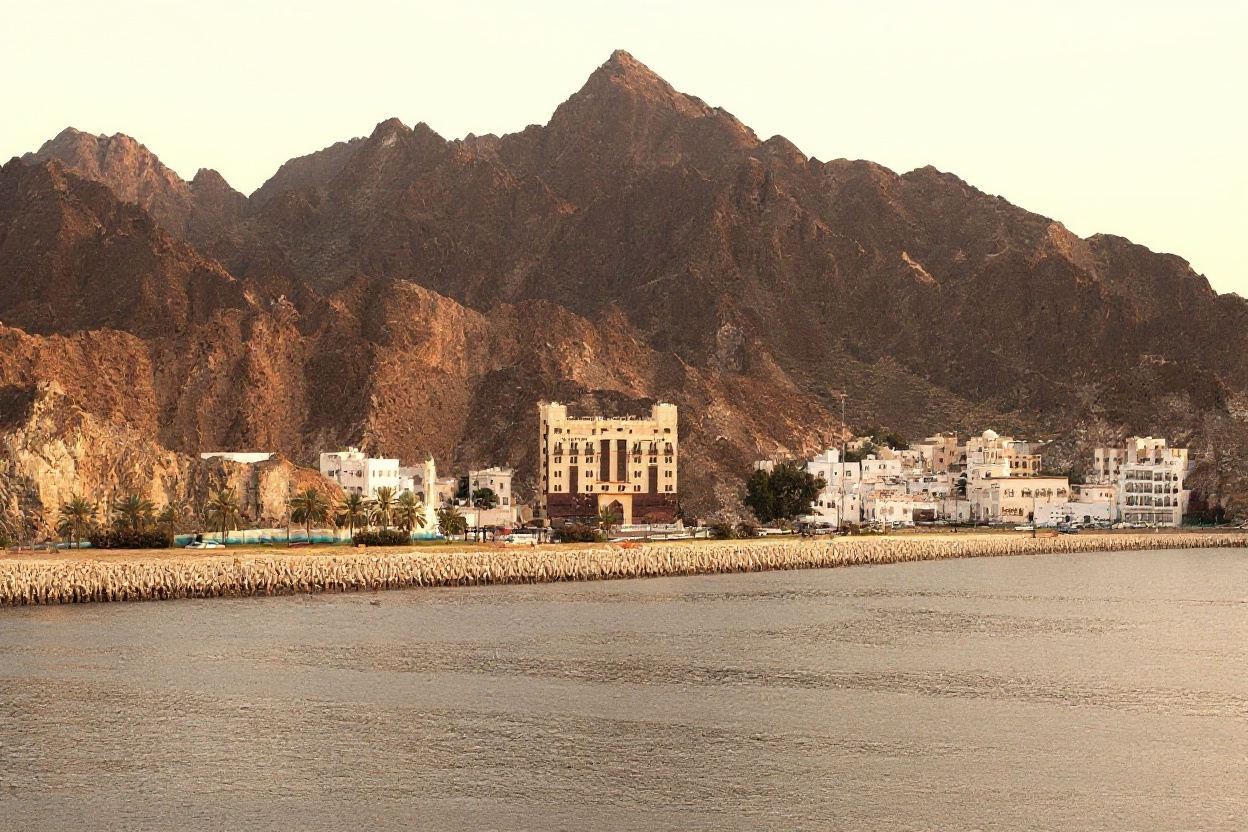
Mutrah is the original trading and fishing port. The souq is here. The fish market is here. The fort above the town is here. The Corniche walk along the bay is here. Narrow alleyways, whitewashed houses climbing the hillside, the smell of frankincense and spice from the market stalls. This is the part of Muscat that functions as a living working place rather than a tourist set piece.
Al Alam / Old Muscat — about 3km east along the coastal road — is the ceremonial district. The Sultan’s Palace (Al Alam Palace, not open to the public), the two Portuguese forts (Jalali and Mirani) that frame the palace cove, the natural harbour. More formal, more manicured, the views of the harbour are spectacular, particularly at the point where the road rounds the headland.
You can walk between them along the Corniche (about 40 minutes in the morning heat of winter, heroic in summer). Or drive — 10 minutes.
Mutrah Souq: What to Buy and What to Skip
Mutrah Souq is a proper working souq — covered alleyways, stone floor, incense smoke, tight navigation. “The spice stalls in the souq are particularly eye-catching, with colorful spices piled up like mountains, exuding a rich aroma that makes people linger.” That’s accurate. The visual and olfactory experience is real regardless of what you’re buying.
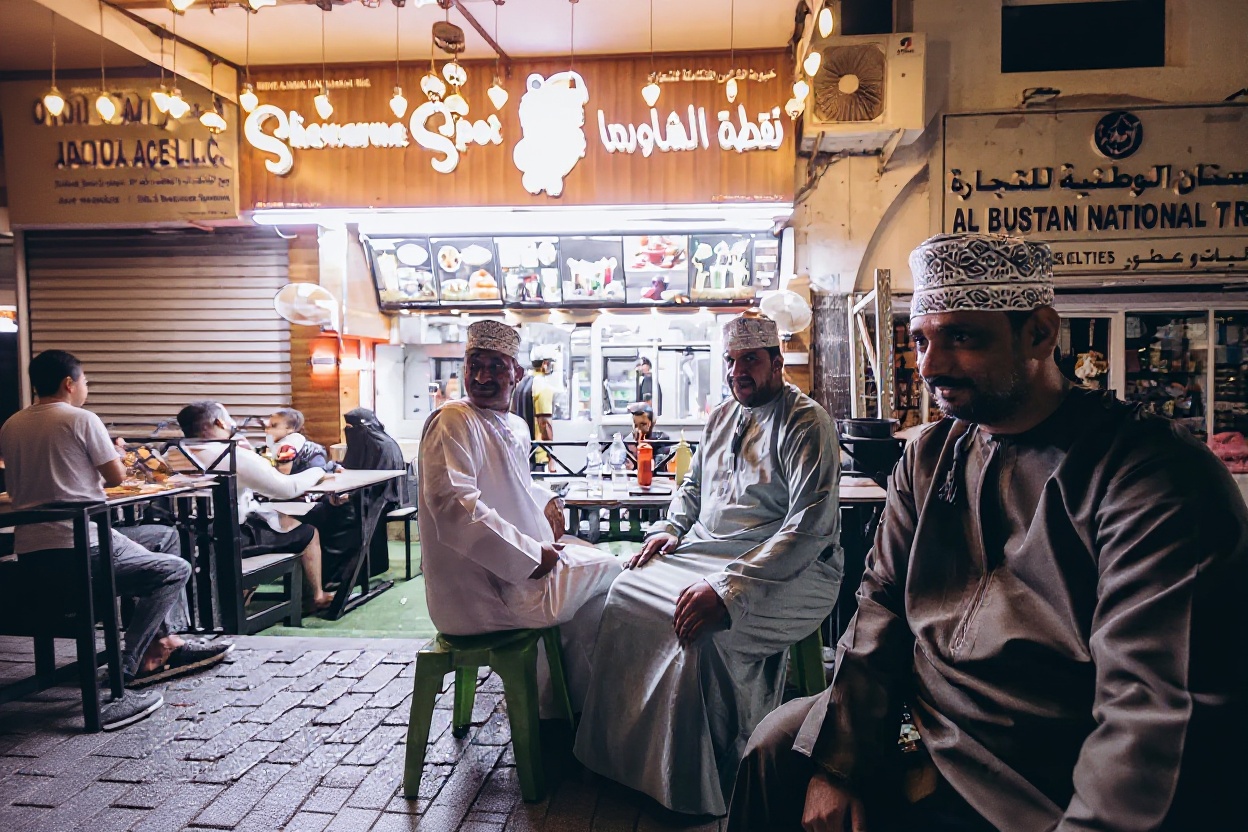
The practical reality: “Many souvenirs are produced in China, but if you’re interested in authentic items, check out the silver goods in Muttrah or Nizwa Souq. You can find locally crafted silver rings, khanjars, and bullet belts in those markets.”
Here’s how to navigate it:
Buy here: Omani silver jewellery (rings, bracelets, khanjar decorations) — look for 925 hallmark or ask directly. Frankincense — Oman produces some of the world’s best and it’s sold here at fair prices. Local spices: dried limes (loomi), rose water, mixed spice blends. These are legitimate local products at reasonable prices.
Be skeptical of: “Authentic Omani” carved wooden goods, mass-produced khanjar with obvious factory finish, anything that looks like it came from a display shelf at an airport. A typical markup on imported goods sold as authentic runs 20–50% over fair price. If the seller gets defensive when you look closely at the craftsmanship, that tells you something.
Cash (Omani Rial) preferred; some shops take credit cards. Negotiating: expect it, but be reasonable. The starting price is rarely the real price, but the gap between ask and accept is smaller than in some markets.
The souq layout is “a maze of shops” by design. Allow yourself to get slightly lost — the alleyways away from the main entrance have better prices and more genuine goods. The premium stalls near the entrance are tourist-facing and priced accordingly.
The Best Times to Visit Mutrah
“The best times to visit Muttrah are early morning and from late afternoon into the evening. At dawn you can see the fish market in full swing and then continue your explorations before the souq closes at lunchtime and it becomes too hot to be outside for long.”
This is the correct advice and I’d follow it exactly.
6–7am: The fish market at the harbour end of Mutrah is active. Working fishing boats, catch unloading, local buyers. The smell is honest — if that bothers you, skip it; if you want to see what a real working port looks like before the tourist version of the day begins, this is the hour. The Corniche is empty, the light is good, the temperature is manageable.
9am–noon: The souq opens. This is the main market period — best variety, all sections open, the frankincense sellers setting out their grades. If you’re doing the souq in one session, come at 9am.
1pm–4pm: Souq closes for the afternoon. This is also the hottest part of the day in Oman — 40°C+ in summer, 28–32°C in winter. The Corniche walk at this time is uncomfortable. The fort at this time is possible but not enjoyable. Use this slot for eating lunch, resting, or visiting air-conditioned museums.
After 4pm: Souq reopens. The evening session — 4pm to 10pm — is when Mutrah is at its best. The temperature drops, the light softens, the corniche fills with families walking. “It is especially lively at night,” and this is accurate — the souq in the evening has better atmosphere than any other time, and the walk along the corniche after 8pm is one of the better evening activities in Muscat.
Mutrah Fort
Mutrah Fort sits on the rocky promontory above the souq, part of the same defensive system as the Old Muscat forts across the bay. It’s smaller than the Al Alam forts, less manicured, and more honest as a result — you can see the original construction clearly.
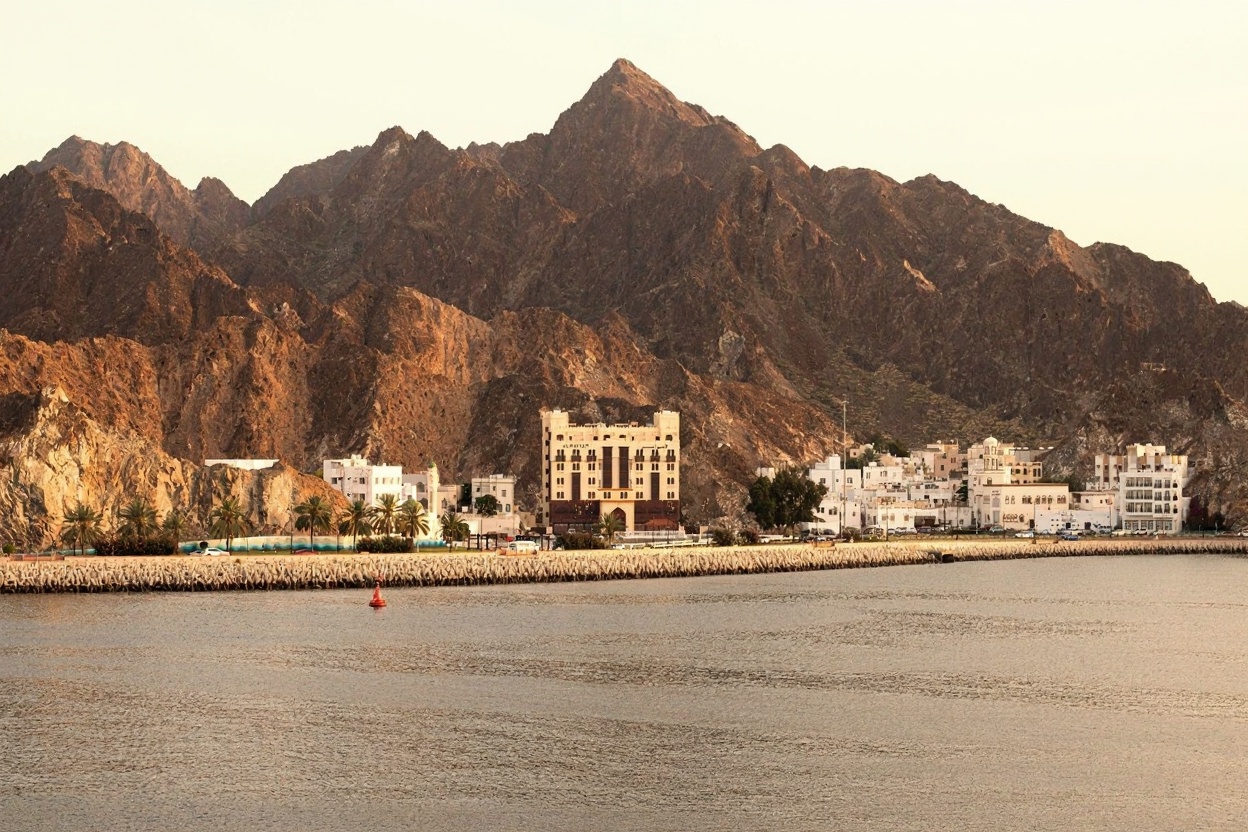
The entry price is 3 OMR (~£6.15 / $7.80) for non-Omani residents, 1 OMR for residents. “3 OMR for non Omani residents and 1 OMR for residents.” Fair enough — the views from the top justify the cost. Parking at the fort is included in the ticket.
The access is steep stairs. “You have to climb up steep stairs, which is not suitable for elderly and disabled.” If stairs are a problem, the lower walls and exterior are viewable for free — “We just stayed below and took pictures of the Fort, didn’t cost us anything.” That’s a legitimate option; the fort from below is still worth photographing.
Allow 45 minutes to an hour inside. The views north along the Mutrah Corniche, south toward Al Alam, and out to the Gulf of Oman are the highlight. The interior has some interpretation about the port’s history — worth reading.
The Corniche Walk
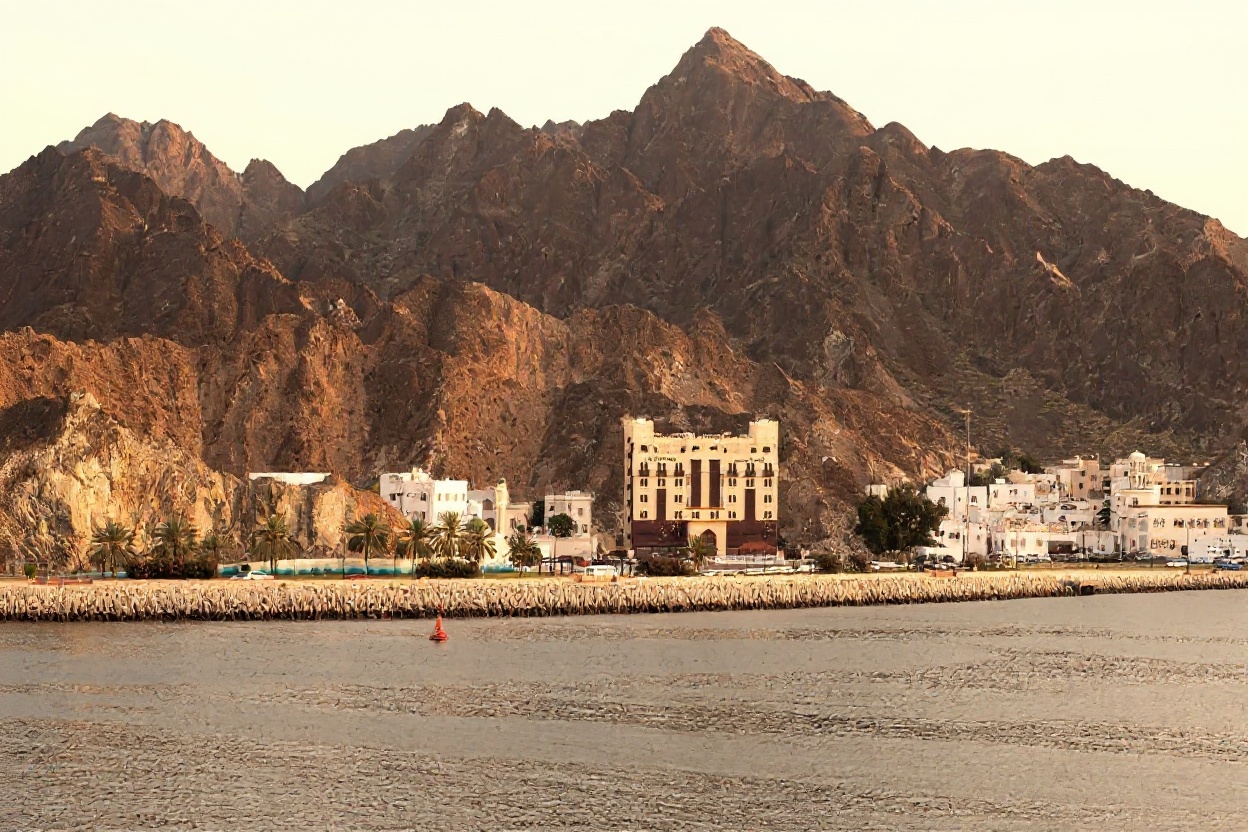
The Corniche runs from the Mutrah fish market at the west end to the old Al Alam gate at the east end — about 1.5km. Flat, paved, fishing boats and traditional dhows visible in the harbour, the fort and whitewashed town rising behind you, Gulf of Oman opening ahead.
“The call to prayer echoes out” — Mutrah has several mosques and the timing of the Corniche walk to coincide with the Maghrib (sunset) prayer gives you one of the more atmospheric walks in Muscat. The prayer call layering across the bay from different mosques is specific to this stretch of waterfront.
At dusk: “the light from the low-rise buildings glimmering on the gently lapping waters of the Gulf of Oman.” This holds up. The pastel-and-white building fronts reflecting on calm water at golden hour is the version of Mutrah worth walking slowly.
Early morning: the fishermen are still working, the water is calm, the temperature is manageable. Best photography light.
Midday summer: don’t do it. 40°C on an exposed waterfront is not a good time.
Al Alam Palace and Old Muscat
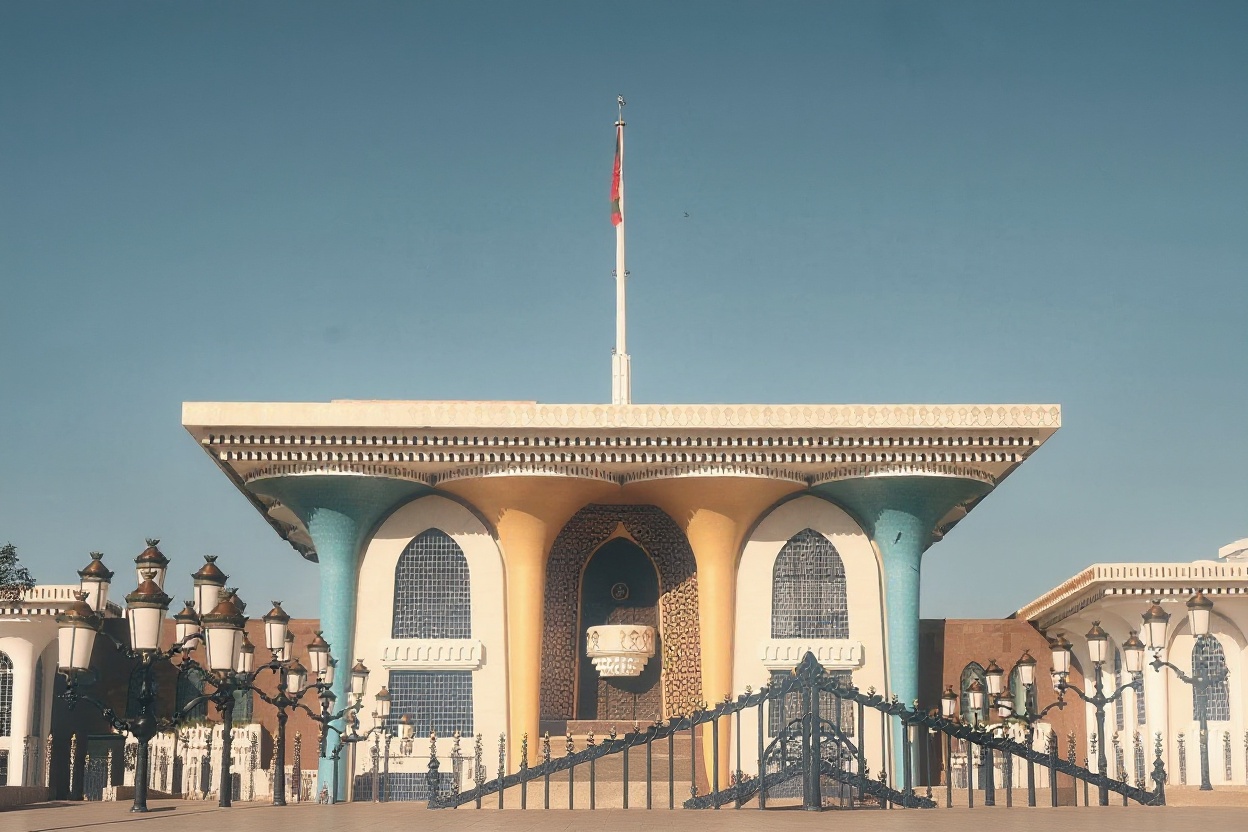
Al Alam Palace is the Sultan’s ceremonial residence and is not open to visitors. The point of coming here is the setting: the palace sits at the head of a small natural harbour, framed by Jalali Fort on one side and Mirani Fort on the other. The architecture is formal, the gardens maintained, the whole composition more spectacular from the street than any palace interior.
The two forts can be viewed from outside — Jalali currently operates as a prison and is not open to visitors; Mirani is accessible for exterior viewing. The road around the Al Alam headland, however, is one of the better drives in Muscat — the point where the road rounds the headland and the harbour opens in front of you is the kind of view that makes the detour worthwhile.
From Al Alam, you can look back across the bay toward Mutrah on a clear morning and see the full sweep of Muscat’s old commercial and administrative geography at once — the trading port at Mutrah, the royal compound at Al Alam, the mountains pressing down to the water behind both.
Getting Around Muscat Old Town
“Muscat was nice (if you have a car) but not the highlight of the trip.” That’s one traveller’s honest take, and the caveat is real — Muscat is a spread-out city designed for driving. A car makes the Corniche drive to Al Alam a 10-minute pleasure rather than a taxi negotiation.
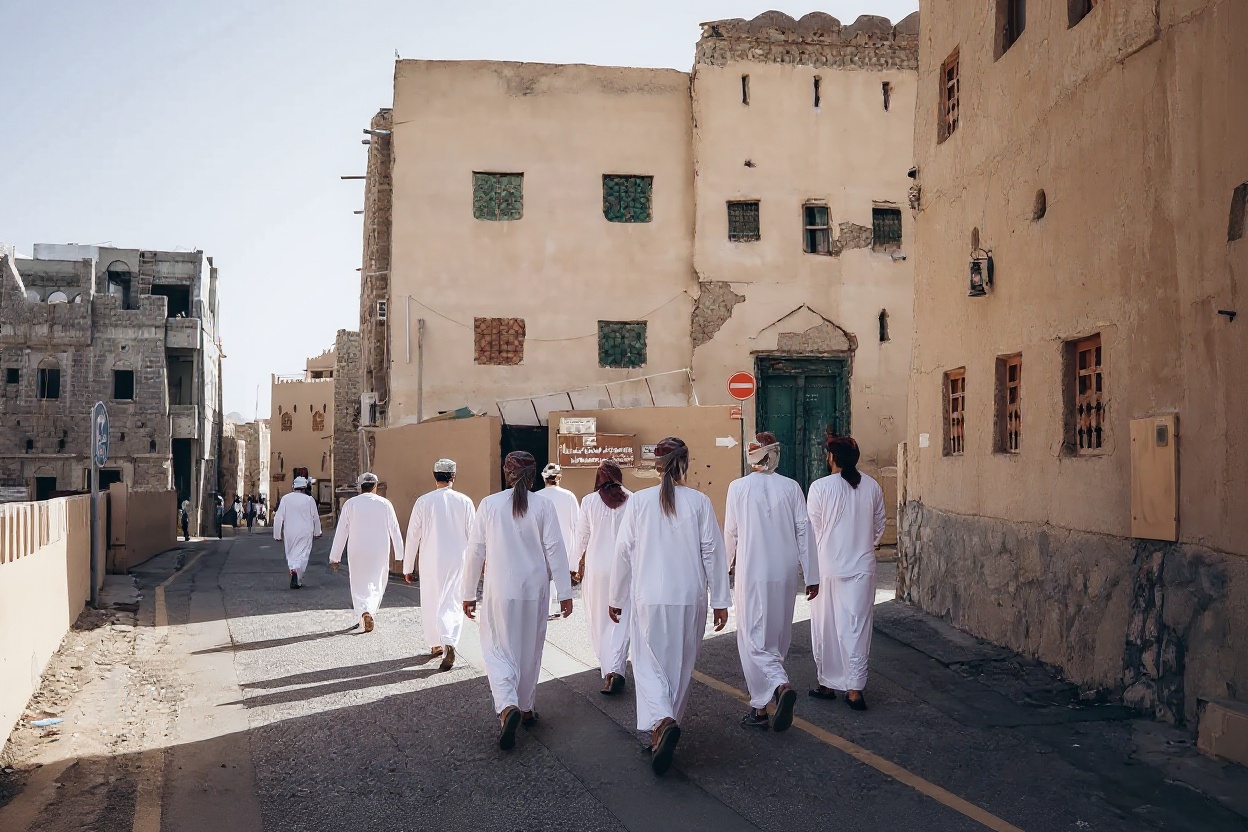
For Mutrah specifically: if you’re staying in Mutrah or the older districts, you don’t need a car. The souq, fort, corniche, and fish market are all walkable from each other. A taxi from anywhere in Muscat to Mutrah should cost 10–15 OMR (£20–31 / $26–39). “Typical fair rate: 10–15 OMR; tourists may pay 18–25 OMR if unfamiliar with local prices.” Use Careem (the regional ride app) to avoid negotiation entirely — the metered price is fair.
From the Royal Opera House area or Qurum: about 20 minutes drive to Mutrah. Worth combining with a morning at the Corniche and lunch before the afternoon souq close.
What Else to See Near Mutrah
The Place and People Museum, just off the main road near Mutrah: “Entry costs 2 OMR per person and can be paid on the door.” Small, focused on the history of Mutrah as a port town, worth an hour if you want context for what you’re looking at when you walk the souq. Photographs allowed.
Sidab — the residential village to the south of Mutrah, tucked behind the headland: “You can visit their home in Sidab to the south of Muttrah, experience traditional Omani hospitality and try a cooking lesson.” This is the kind of arrangement that doesn’t have a booking system — ask at the tourist information office in Mutrah or through your accommodation. Not guaranteed to be available but worth asking about for a half-day.
The fish market: technically in Mutrah but worth a separate mention. At its best between 6–7am when the boats are unloading. Hammour (the local rock cod), kingfish, tuna, shrimp — all being traded and weighed. The Mutrah Souq fishmonger at the harbour end sells the freshest hammour in Muscat. This is a working market, not a spectacle, but watching it for 20 minutes before the souq opens gives the area a completely different dimension.
The Frankincense Trail: What Mutrah’s Souq Tells You About Oman
The frankincense in Mutrah Souq is not decoration. Oman has been the world’s primary source of high-quality boswellia sacra — the tree whose resin produces frankincense — for at least 5,000 years. The Dhofar region in southern Oman still produces Grade A frankincense, the pale, dry, large-chunk variety that burns cleanly with a specific citrus-cedar scent that cheaper varieties don’t replicate.
In Mutrah Souq, you’ll find frankincense sold in three or four grades. Grade A is pale, almost white, dry, and large-chunked. Cheaper grades are darker, smaller, and stickier. The difference in price is significant — Grade A can cost 4–8 OMR per 100g (£8–16) while the mixed grades go for 1–2 OMR. Worth buying the good stuff. You’re in the country that produces it.
How to burn it: a small charcoal burner (mabkhara) costs 2–5 OMR at the souq. Buy charcoal discs (a few hundred baiza per pack). Light the disc, wait until it’s glowing grey, place a small piece of frankincense on top. The resin melts and produces smoke within a minute. This is how Omani homes have smelled for 3,000 years. Take it home. It lasts.
The frankincense route that connected Dhofar to the Mediterranean — through Oman, Yemen, and up through the Arabian Peninsula to Rome and Alexandria — was one of antiquity’s most important trade roads. Muscat’s position as a port city meant it handled the sea route portion: frankincense from Dhofar loaded onto dhows at Salalah and Sur, shipped up the coast to Muscat, traded on to the Gulf and beyond. The Mutrah Souq you’re walking through today is the descendant of those trading operations. The incense sellers know this. The category of goods hasn’t changed.
Omani Coffee and the Correct Way to Accept Hospitality
Kahwa (kah-WAH) is Omani coffee — light green, cardamom-heavy, served in tiny handleless cups called demitasse with dates alongside. It’s not strong in the Italian sense; it’s more like a warm, lightly bitter herbal drink with cardamom as the dominant flavour. The caffeine content is modest. The point is the ritual and the hospitality.
You’ll be offered kahwa at shops in Mutrah Souq, at the entrance to the fort, and at any Omani home you’re invited to. The correct response is to accept. You signal you’re done by gently waggling the cup when returning it. If you’re still holding the cup, the host will refill it. This is not a test — it’s a social convention.
Kahwa is served cold in some contexts and warm in others. The souq version is usually room temperature or slightly warm. The proper accompaniment is halwa (Omani sweetmeats — a dense, rosewater-flavoured jelly studded with nuts, saffron-coloured) sold by weight from large shared platters. 200g of halwa costs 1–2 OMR. Buy it, eat it with the coffee, understand why this combination has been the Omani greeting ritual for centuries.
The fish market at the harbour end of Mutrah sells fresh hammour (a local rock cod), kingfish, tuna, and shrimp. Morning hours (6–7am) are when the catch from overnight boats arrives. Even if you’re not buying, watching a working fish market at first light gives Mutrah a context that the tourist version of the day doesn’t. The smell is honest. The fishermen are not performing for visitors. This is how the harbour has worked for longer than the fort has been standing.
Practical Notes: The Oman Context
Oman is an absolute monarchy under Sultan Haitham bin Tarik. For most visitors, the political system is irrelevant to the trip: Oman is one of the safest countries in the world to travel in, the Omani population is genuinely hospitable to foreign visitors, and the infrastructure for tourism is well-developed without being overwhelming. LGBTQ+ travellers should be aware that same-sex relationships are illegal — public discretion is standard.
The Omani Rial is a strong currency: 1 OMR ≈ £2.05 / .60. This means prices that look modest in OMR are actually significant in pounds or dollars. The 3 OMR fort entry (£6.15 / .80) and 2 OMR museum entry (£4.10 / .20) are reasonable for what they are, but add up if you’re doing multiple sites.
Dress code in Mutrah: not as strict as some Gulf countries, but modest dress is appropriate. Shoulders and knees covered for women when visiting the fort and mosque areas. Men in shorts are fine. The practical version: dress for hot weather but avoid beachwear outside the beach context.
Photography: generally permitted in Mutrah and on the Corniche. Inside the sultan’s palace complex (Al Alam): photography is not permitted. The fort and souq welcome photographs. Ask before photographing people — a gesture toward your camera and a questioning look is universally understood.
- What is Mutrah Souq famous for?
- Mutrah Souq is one of the oldest covered markets in the Gulf — famous for frankincense, Omani silver jewellery, traditional khanjar (ceremonial daggers), and spices. It’s also where a lot of imported goods get sold as “authentic Omani,” so knowing which is which matters. Genuine local products: silver, frankincense grades A and B, local spice blends. Most carved wooden goods and generic souvenir items are imported. Ask about origin directly.
- What time does Mutrah Souq open and close?
- 9am–1pm (morning session), then 4pm–10pm (afternoon/evening session). The souq closes completely for several hours in the middle of the day — don’t arrive at noon expecting it to be open. The evening session is arguably the better one: cooler, more atmospheric, the corniche busy with families walking. If you’re only visiting once, go at 9am and stay until close, or go after 4pm and walk the corniche at dusk.
- How much does Mutrah Fort cost?
- 3 OMR (~£6.15 / $7.80) for non-Omani visitors; 1 OMR for Omani residents. Parking is included in the ticket. The fort has steep stairs — not suitable for anyone with mobility difficulties. If stairs are an issue, the exterior view is accessible for free. Allow 45–60 minutes inside. The views over Mutrah Bay and toward the Gulf of Oman from the upper walls justify the entry price.
- Is Mutrah safe to visit?
- Yes. Oman has one of the lowest crime rates in the Middle East and Mutrah is a functioning local neighbourhood, not a tourist quarter. Exercise the standard precautions in any market: keep valuables secure, be aware of your bag in narrow alleyways, don’t leave items unattended. The usual souvenir market dynamic applies — imported goods sold as authentic is the main “scam” to watch for, not physical safety issues.
- How do I get to Mutrah from central Muscat?
- Careem (the regional ride-share app, equivalent to Uber) is the simplest option — 10–15 OMR from Qurum or the hotel district, fixed metered price, no negotiation. Regular taxis without meters can be 18–25 OMR for the same journey if you’re not familiar with local prices. For the early morning fish market, arrange the night before through your accommodation or book a Careem in advance.
- What should I eat near Mutrah Souq?
- Fresh fish at the harbour-end restaurants — hammour (rock cod), kingfish, and shrimp are all local catch. A plate of grilled fish with rice runs about £8–10 / $10–12. Omani kahwa (cardamom coffee) from a small café on the corniche is the right accompanying drink. The hotel breakfast buffet if you’re staying nearby runs 3 OMR (~£6.15 / $7.80). For a full lunch sit-down: lamb with rice at a waterfront restaurant is approximately £8 / $10.
Where to Eat Near Mutrah: Daniel’s Practical List
The Mutrah Corniche area has a range of eating options, from the very cheap to the reasonably priced. Here’s what’s actually worth stopping at:
For fresh fish — the harbour-end stalls: The cluster of simple restaurants and fish stalls at the northern (harbour) end of Mutrah, near the fish market itself. Order the grilled hammour (rock cod) or kingfish — caught that morning, cooked simply with rice and salad. Budget 2.5–4 OMR (~£5–8 / $6.50–10) for a full plate. The quality is high because the supply chain is short. This is where the fishmongers eat. It is also where I eat when I’m in Mutrah.
For Omani coffee and halwa — the Corniche cafés: Several small cafés along the promenade between the fish market and the souq entrance serve Omani qahwa (cardamom coffee) and halwa (the dense, rosewater-saffron sweetmeat). This is the correct Omani hospitality pair — bitter coffee with intensely sweet halwa in small portions. Expect to pay 0.5–1 OMR for the coffee; halwa is sold by weight from shared platters at 1–2 OMR for a small portion. Eat it on the Corniche bench and watch the dhow harbour while you drink.
For lunch — Bait Al Luban Restaurant: One of the few restaurants in Muscat that serves traditional Omani food — shuwa (slow-cooked marinated lamb), machboos (spiced rice with meat), and harees (slow-cooked wheat and meat) — in a setting that isn’t primarily aimed at the tourist market. Located in the Old Muscat area rather than Mutrah directly, but worth the 10-minute drive. Main courses 5–9 OMR (~£10–18 / $13–23). Reservations worth making for dinner service.
Getting to Mutrah from Muscat Airport
Muscat International Airport is approximately 35km west of Mutrah. Options:
Taxi from airport: 15–20 OMR (~£31–41 / $39–52) direct to Mutrah or anywhere in old Muscat. The taxi rank is outside arrivals. Negotiate before getting in — or use the Careem app from the arrivals hall (book a few minutes before exiting to have the car waiting). Careem prices for the same journey: 10–14 OMR.
Mwasalat bus (Route 1): The airport bus service runs to Ruwi (Muscat’s commercial centre), from which a taxi to Mutrah costs a further 5–7 OMR. Total journey time 1–1.5 hours, total cost 3–4 OMR. Practical for budget travellers who aren’t in a hurry. The bus runs roughly every 30–45 minutes.
Hire car from airport: The practical solution for any trip that involves more than Muscat city itself. Pick up the hire car at the airport, drive directly to Mutrah (35km, 30–40 minutes on the expressway). This gives you the flexibility to extend to Wadi Shab, Nizwa, or the coast without booking additional taxis or tours. Car hire from airport: 15–25 OMR/day depending on vehicle type.